
31°C, New York


Notification products, updates
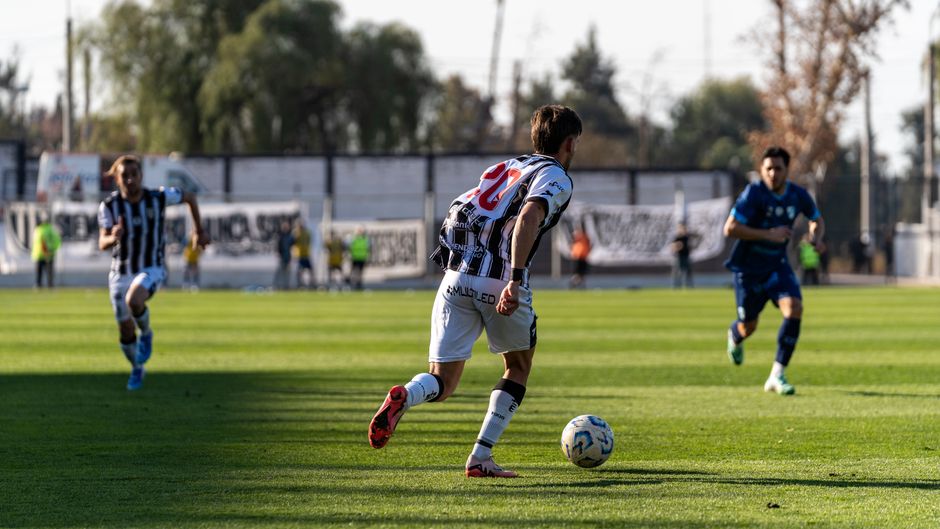
Watch enough football and you start to notice that two teams can play the same formation, field players of similar quality, and still look like they're playing entirely different sports. One side snaps forward in three passes and scores; the other strings together fifteen passes and somehow ends up back at their own center-back. Neither approach is wrong. But the way each team reads a match, creates chances, and absorbs pressure could not be more different — and understanding those differences makes you a sharper viewer.
So let's put the transition-heavy counterattacking side next to the patient build-up side and break them down, shot for shot. What are they actually trying to do? What cues do they look for? And when does one approach expose the other?
Counterattacking football is built on a simple premise: the best time to attack is when the opponent is disorganized. That window opens the instant a team loses the ball or commits numbers forward. The counterattacking side deliberately invites pressure, sits in a compact block, and then explodes into the space behind once possession turns over. They don't need the ball to feel in control — they need space.
Controlled build-up flips the logic. Possession itself is the defensive tool. By keeping the ball, the patient side denies the opponent the chance to attack and slowly unbalances them through circulation, positional rotation, and drawing opponents out of shape. The goal isn't just territory; it's to manipulate the opponent into making a mistake in their structure before striking. Space is created, not found.
Think of Atalanta under Gian Piero Gasperini — relentless vertical transitions, attacking the moment they win it — versus a Pep Guardiola side patiently probing until a passing lane finally opens. Same game, opposite instincts.
This is where it gets practical. Good players don't just run; they scan for tells. Here's what each system prioritizes.
The key contrast: counterattacking sides read space and time; build-up sides read structure and pressure direction.
Let's get concrete about the actual sequences.
A classic counterattack often runs on a three-to-five second clock. Win the ball in the middle third → first pass forward into a runner's feet or into the channel → one or two support runners overlapping → finish. In this sequence, the number of passes is usually fewer than five, which is why analysts often cite figures showing that a large share of open-play goals come from possessions that last under ten seconds. Counterattacking sides are essentially optimizing for that statistic.
Build-up play runs a different clock. The first phase is often goalkeeper-plus-center-backs-plus-pivot, advancing the ball patiently. The second phase targets the midfield, and the third looks to break the last line. Some top possession teams complete 700+ passes in a match, with a passing accuracy over 88%. The build-up side's efficiency isn't measured by chance volume alone, but by controlled entries — how many times they get into the final third without losing the ball in a dangerous area.
There's a subtle economic trade-off at play: For more on this, see xoilac.
The best sides blur this. Liverpool under Jürgen Klopp was an excellent example — a genuine high-intensity press generating elite transitions and the patience to circulate in settled possession. Manchester City in big away games often shifts toward a counterattacking instinct after scoring; the philosophy is fluid.
If a team presses high, the counterattacking side's favorite response is a long, driven pass over the press into a channel runner. If they drop deep, the build-up side is happy to have center-backs carry the ball forward into the vacated midfield.
A counterattacking team often looks more comfortable when trailing or drawing late — they want the opponent to chase. Build-up sides want the lead, so they can force the opponent to take risks and expose those transitions. Watch for a subtle pitch in intensity after the first goal.
This is the advanced lens. Possession teams must set up their 'rest defense' — the players left behind during a build-up — so they can handle the opponent's counter. If only one player covers the center, expect a counterattack to target it repeatedly.
Counterattacking sides feast on teams that build up carelessly or push full-backs forward without cover. Their best conditions: a low block, an aggressive opponent, and a wet or fast pitch. Build-up sides, by contrast, love to face a deep-bunkered counterattacking opponent — because sustained pressure eventually generates error or a set-piece, and patient teams can afford to be methodical.
The honest tactical truth: counterattacking football punishes mistakes, but build-up football punishes organization. A well-organized deep block can frustrate even elite possession teams, which is why the most watchable matches aren't won by one style but by the style shift — a side that starts patient and pivots to counterattacking the moment the opponent commits.
Neither counterattack nor controlled build-up is inherently superior. They're different answers to the same question: how do you score more than the other team while managing risk? The next time you watch, don't just track the ball — look at the body orientation of the pivot, the height of the full-backs, and the recovery speed of the losing team's midfielders. That's where the story of a match is actually told. Which style is winning on the night is usually a matter of reading space, pressure, and structure — and that's the kind of football that stays with you long after the final whistle.

Glade & Grove shares practical, down-to-earth guidance on british woodland gardening, wildlife and countryside walks for readers across the UK.
Stay Tuned With Updates


Leave A Comment